Imagining the World Before Geography (Fossil Cities)
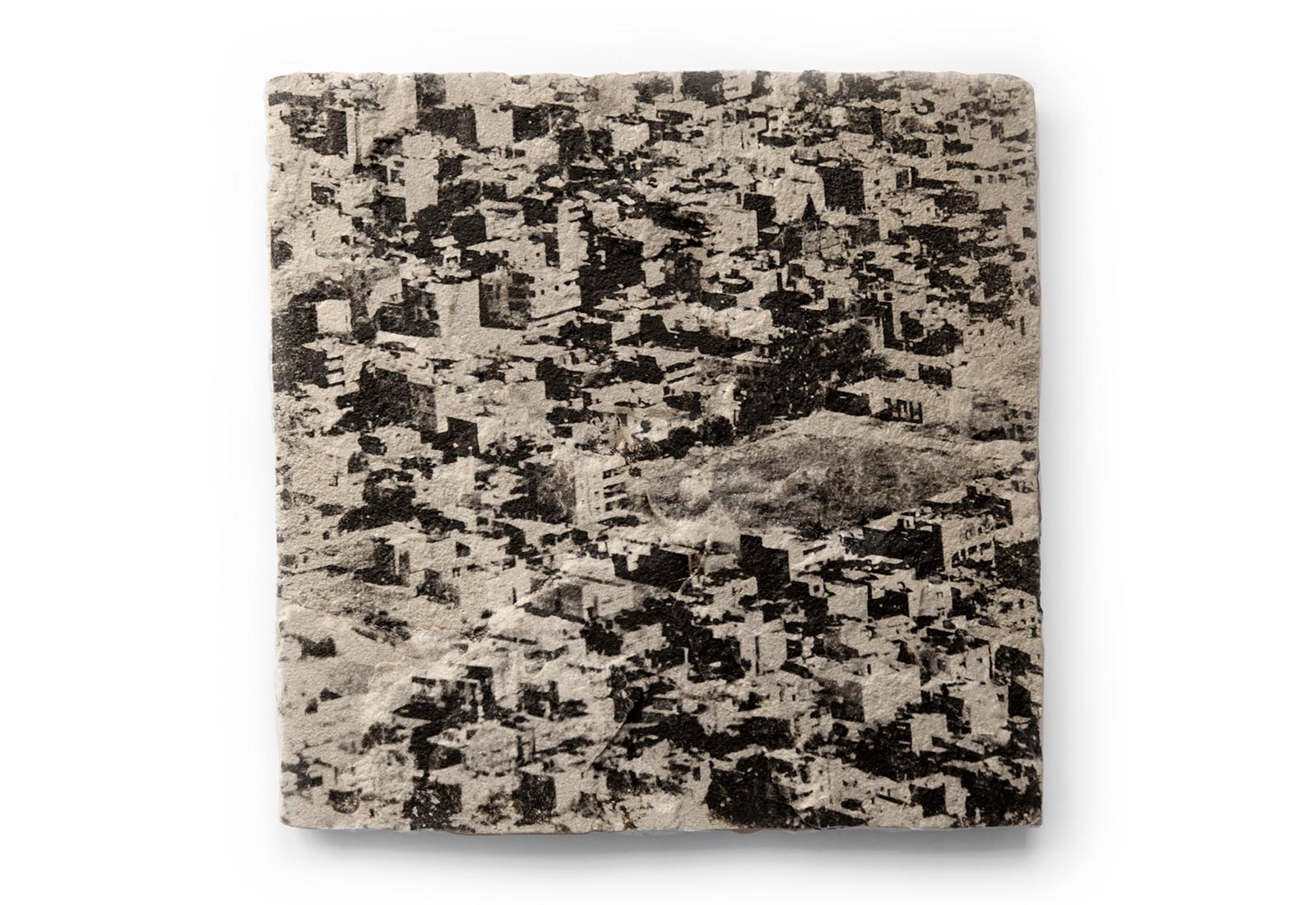
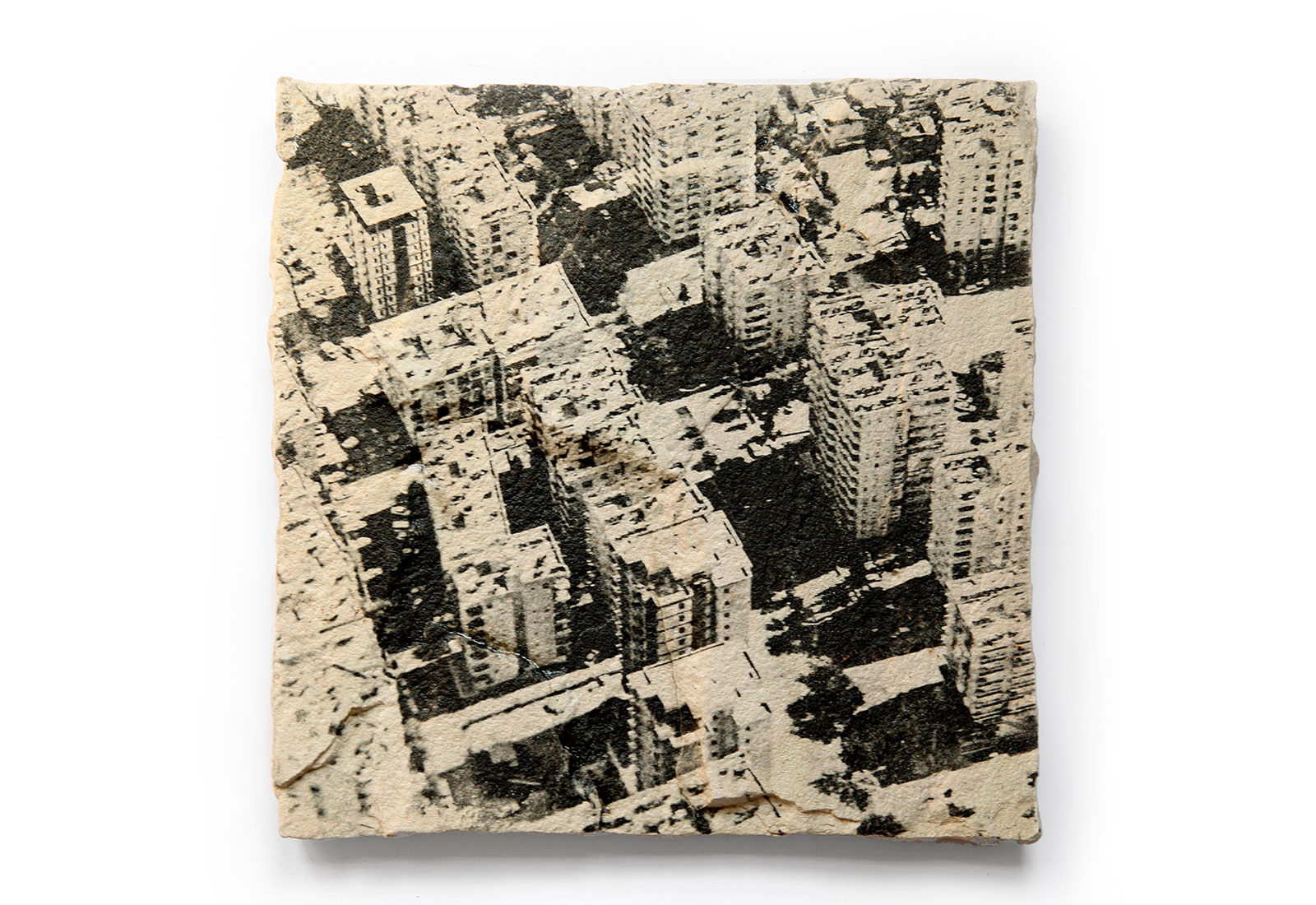
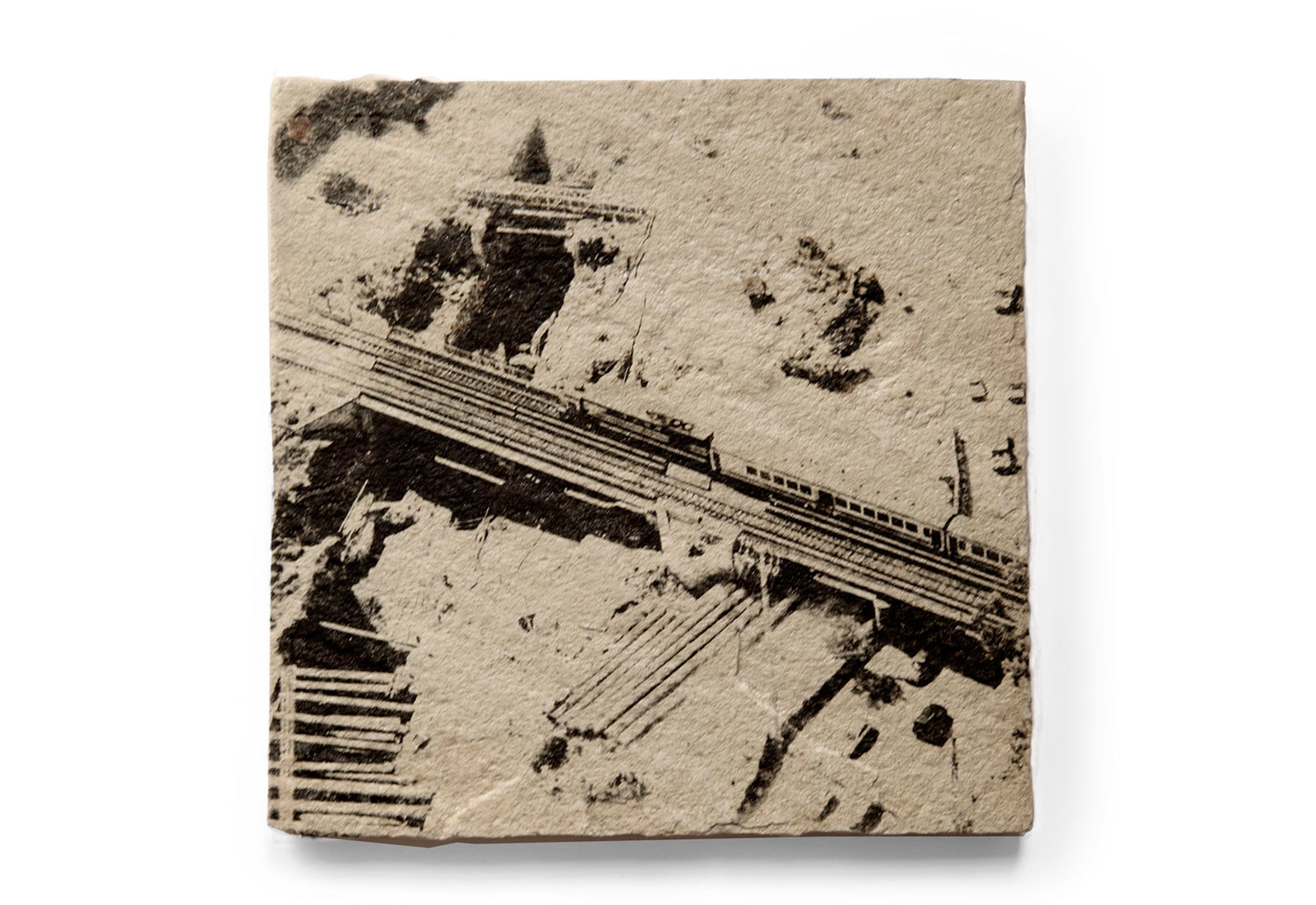
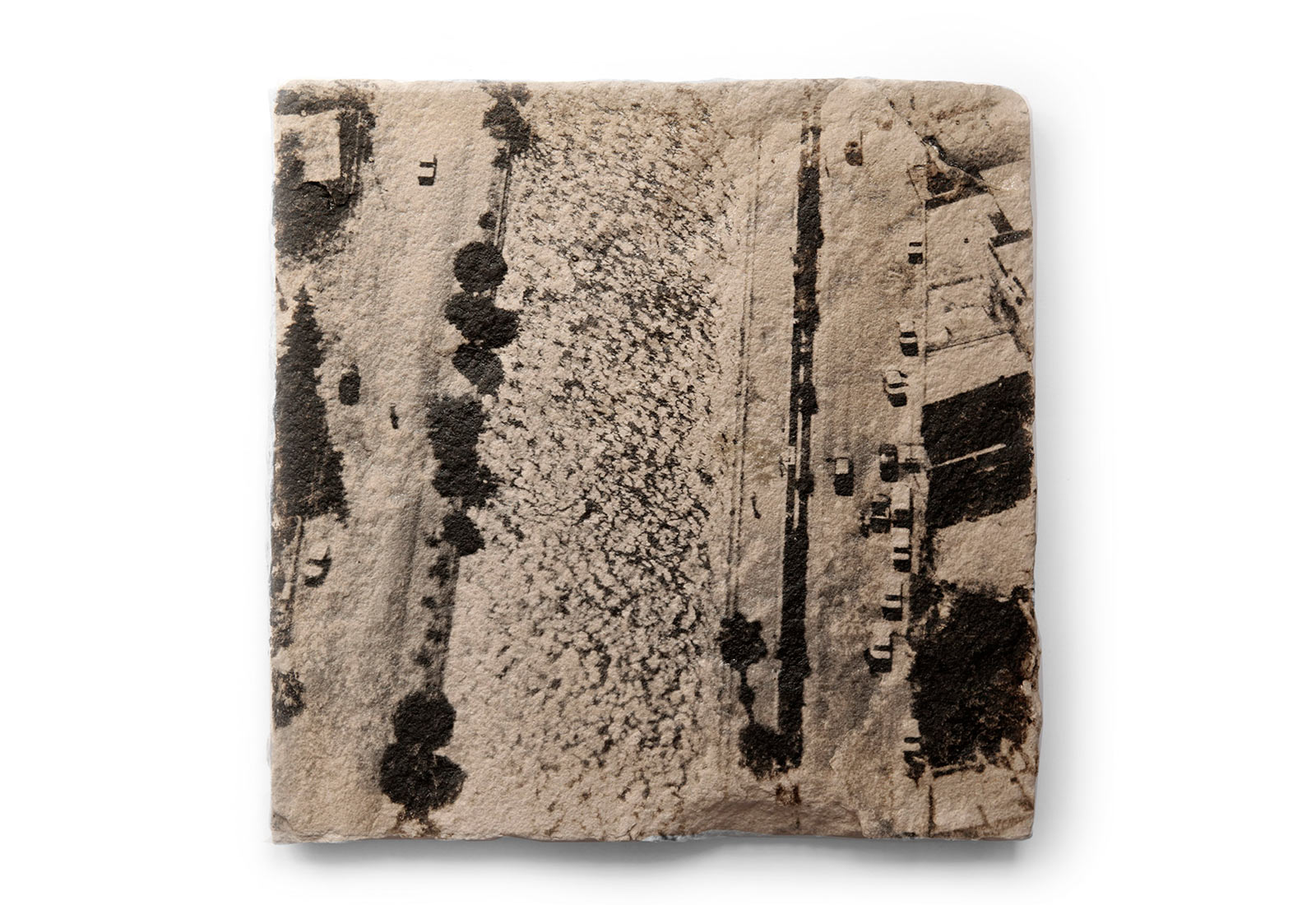
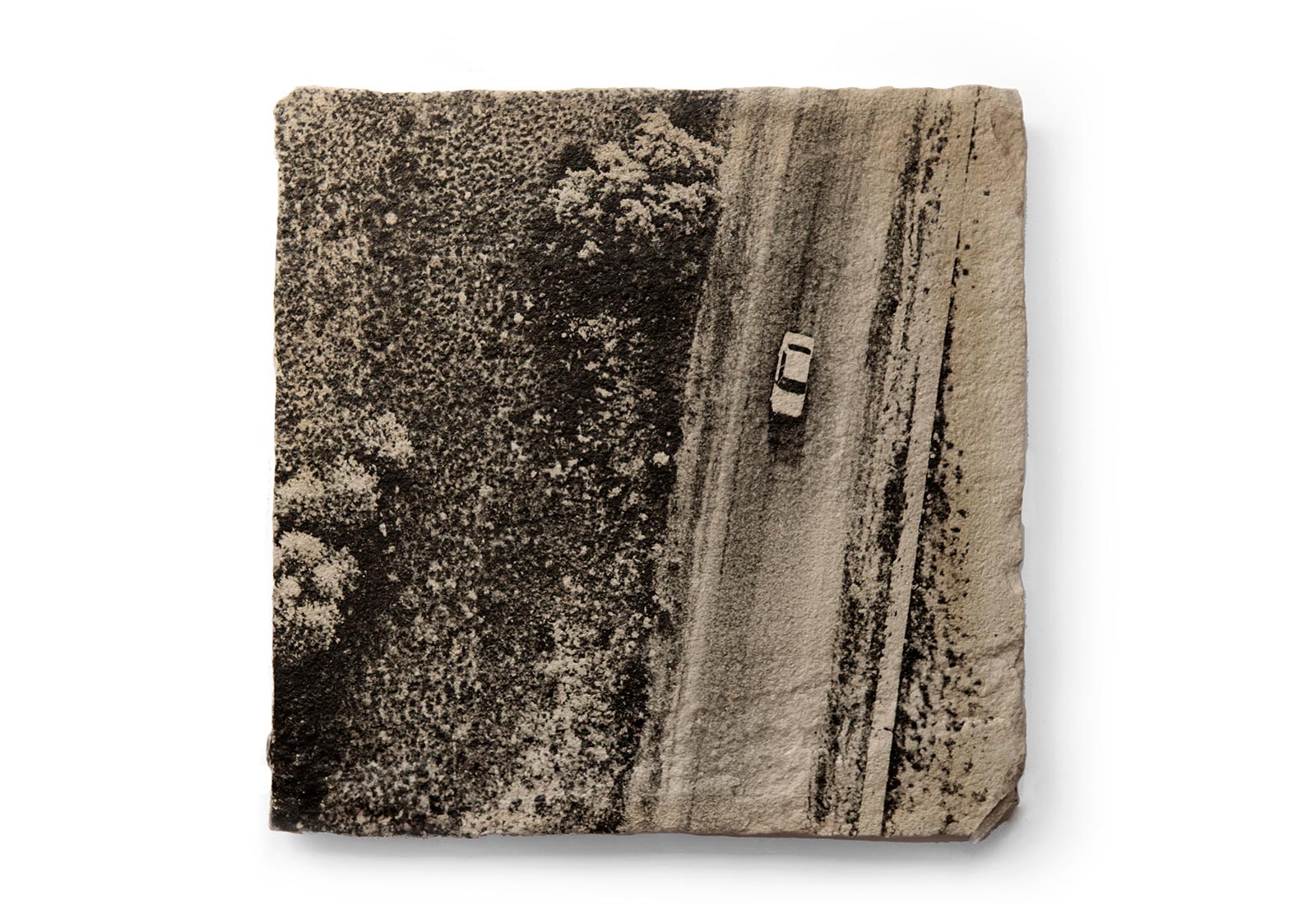
B&W silver gelatin prints on stone slabs (liquid emulsion) 34cm x 34cm.
These aerial views of unidentified cities highlight the connection between photographic prints and fossils as historical traces of the past. Both the momento mori paintings of the Dutch 17thC masters and the traces of flora and fauna in the fossil record serve a similar function as mnemonics of the passage of time. The human lifespan is eclipsed both by historical memory and by geological time and these timescales are embedded in the analogue world:
“On the retina screen no such layering exists – it prefers instead to refresh its images, as if immersing them in water like pebbles in the beach-rendering their colours more lustrous their textures seemingly more immediate, despite their age – but there is no sense of time being accumulated – the rings of steady growth and the layers accumulated through deposition belong to the analogue world, as do the mechanisms of decay – the visual signals of the passage of time. When information is lost in the digital world it is discharged in a flash of static – rather than buried in an incremental accretion of matter.”
read the full text: https://www.allanforresterparker.co.uk/text/silvertown/
We have now told you of the kingdoms that exist in this part of the Island. Of those in the other part we shall say nothing, because we were never there. So we will leave it at this point and tell you of a very little island called Gauenispola.
Marco Polo – The Travels