TRASH – ARCHIVING THE POOR IMAGE
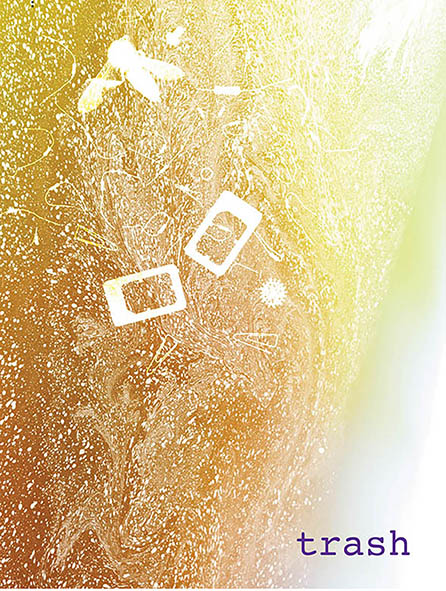
‘TRASH’ is an Illustrated essay examining the role of the ‘poor image’ – both digital and analogue – in artistic productions such as photobooks.
“…Image-creating technologies of the digital age do not accommodate the accident and variation, which processes that rely on the interaction of materials are heir to. These have to be added afterwards by means of filters or digital controls. The aesthetic provided by these devices is a given – it arrives fully formed and in consequence is often of less interest to image makers for whom convenience is
not necessarily a priority.”
Poor Image(1) describes a hierarchy of images dominated by the ‘flagship’ high resolution outputs produced by multinationals, state actors and the culture industry. These have given us large format photographs by the likes of Andreas Gursky and Thomas Struth whose mimetic and cinematic clarity can only be achieved with the help of resources made available by funders and collectors with deep pockets.
The previous generation of high-end moving image presented 35mm and 70mm film formats in which optimised image quality was a given. Cinematic sharpness and clarity was seen as the preserve of the auteur, the expert and the (usually male) genius, fencing off the field of the professional image maker from vernacular production by less well funded artists and political propagandists. More recently these analogue formats have been replaced by high resolution digital outputs such as 5K.
Marxist inflected art produced by conceptual artists during the 1960s and 70s made a point of rejecting high-end practices which they saw as the establishment expression of cultural materialism and instead embraced adequate, workman-like productions frequently with rough edges, which signalled their presumed authenticity and supposed lack of market value.
At the bottom end of this hierarchy of the visual world are the ‘poor images’. The endless soup of self-composting jpegs, AVI files and animated GIFs, copied and compressed so often they are on their way to abstraction, in the process losing their integrity, often their titles and eventually their identity as meaningful representations as they flit around the globe. (continues…)
“…an act of analogue rebellion in an obnoxiously digital world” – Teju Cole on the photobook (The Guardian, 24 Feb 2020).